Where Do Alabama Cities Get Their Municipal Drinking Water?
Alabama city water does not come from a single statewide source. Depending on local geography and utility arrangements, a municipal supply may begin in a groundwater well, a river or reservoir, or another provider’s treatment plant. Knowing the source helps explain how water is treated and where to find reliable details about the tap water serving your home.
The main sources of municipal drinking water in Alabama
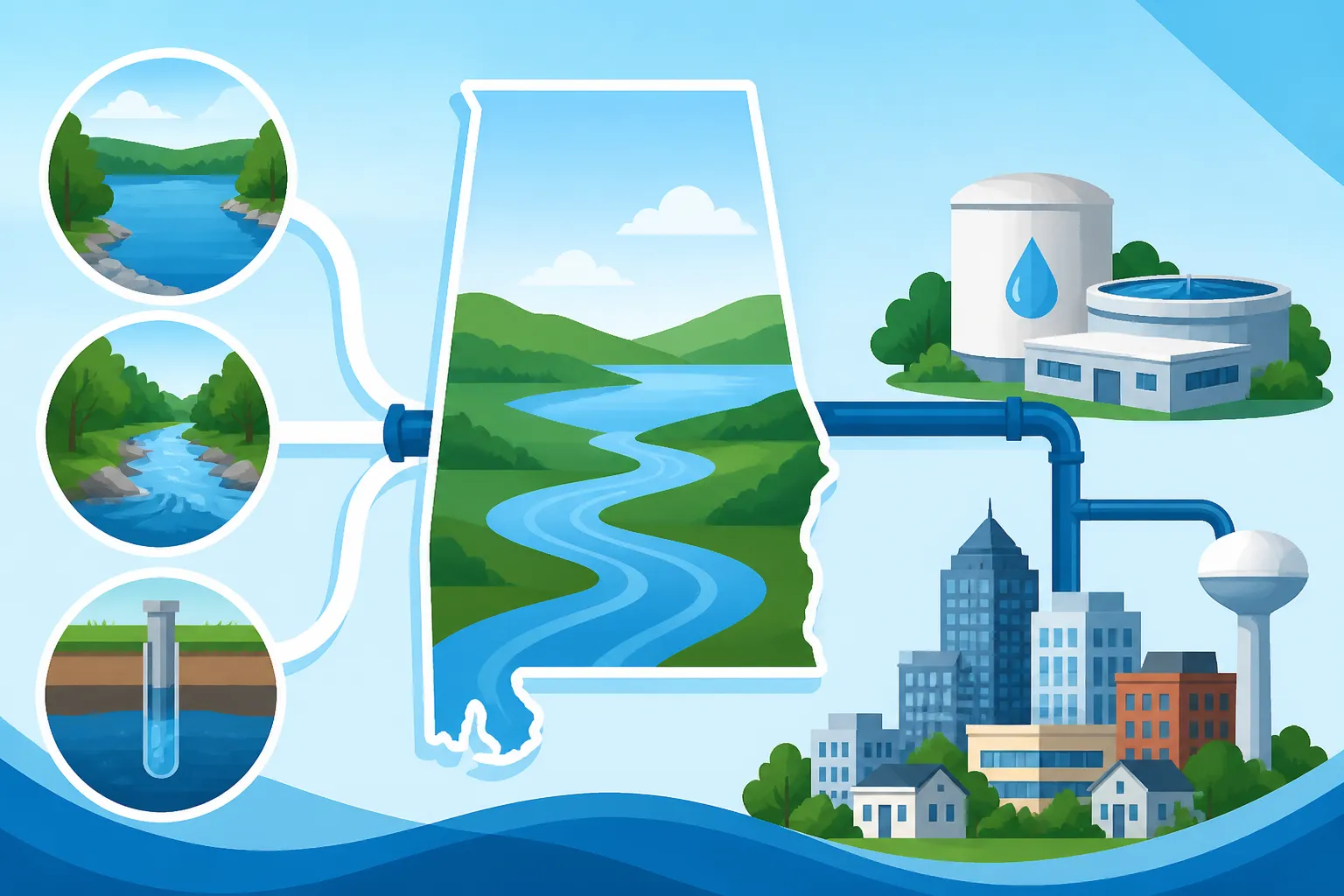
Municipal drinking water generally starts as groundwater or surface water. Groundwater is drawn from wells and aquifers beneath the land. Surface water is collected from rivers, lakes, or reservoirs. Some utilities may also receive treated water from another supplier, either as a regular part of service or to support their own supply.
A city’s source depends on more than its location. Local geology affects whether usable groundwater is available. The size and reliability of nearby rivers and reservoirs matter too, as do treatment facilities, storage, pipelines, water demand, and agreements between utilities. Two communities in the same region can therefore get water from different sources.
According to the Alabama Department of Public Health, groundwater is the main drinking water source for 44 percent of the total population or more than 2.1 million people. That figure describes the state’s reliance on groundwater overall; it does not tell you which source serves a particular city or neighborhood.
Surface water also plays an important role. The Alabama Department of Economic and Community Affairs says Alabama has over 77,000 miles of rivers and streams. Those waterways are part of the state’s water landscape, but their presence does not mean a particular city uses a nearby river. The supplier’s report is the better place to confirm the source for your service area.
| Source type | Where the water begins | What to look for in the supplier’s report |
|---|---|---|
| Groundwater | Wells drawing from underground aquifers | Well names or locations, aquifer or source descriptions, and treatment information |
| Surface water | A river, lake, or reservoir | Named source waters, watershed information, and treatment details |
| Purchased treated water | Another public water supplier’s treatment system | The supplying system and whether the water is purchased or blended |
| Mixed supply | A combination of sources | Each listed source and any explanation of how the utility uses them |
These categories describe where water begins, not necessarily every step between the source and your faucet. Water may be treated, stored, blended, and moved through a distribution network before it reaches a home. For a closer look at statewide source types, see Surface Water vs Groundwater for Alabama Drinking Water Supplies.
How groundwater supplies serve Alabama communities
Groundwater is water held beneath the ground in soil and rock formations. A public water system can pump it from wells, treat it as needed, and send it through pipes to customers. Depending on local conditions, a supplier may rely on groundwater as its main source, use it alongside surface water, or obtain it from another system.
The presence of wells does not make every groundwater supply the same. Aquifers vary in their geology, depth, and water chemistry. Naturally occurring minerals can affect taste, staining, or scale. Land use and conditions around wells can also matter to source protection. A utility evaluates its supply and treatment needs based on the water it actually draws, rather than assuming every well has identical characteristics.
It is useful to distinguish a municipal well from a private household well. A municipal well is part of a public water system that supplies multiple customers and is subject to public-system oversight. A private well generally serves a property or a small group of users, and homeowners have different responsibilities for testing and upkeep. If a home is outside a municipal service area, the municipal water report may not describe its water. The related article Alabama Private Well Records Every Homebuyer and Tenant Should Check explains why private-well records are a separate consideration.
Groundwater sources can be less visible than rivers or reservoirs, but that does not mean the water reaches customers untreated. Utilities decide what treatment is needed based on source conditions and applicable requirements. Treatment may address particular contaminants, minerals, or operational needs; the process varies by system. A description of a well source alone does not tell you the complete treatment process or the results of monitoring.
Source labels in water reports can also be unfamiliar. A report may list a well, a group of wells, a source-water name, or a supplying utility. If the report uses technical terms without explaining them, the utility can clarify what the label refers to and whether it describes the water before or after treatment. Understanding Source Details on Annual Water Reports can help you interpret the source information alongside the rest of a report.
How rivers and reservoirs supply municipal water
Surface water comes from water bodies at the land’s surface, such as rivers and reservoirs. A utility that uses surface water collects it at an intake and sends it to a treatment plant. The plant’s process is designed around the source and the treatment goals for the system.
A reservoir may store water collected from a river, stream, or surrounding watershed. Storage can help a utility manage supply over time, but it does not make the water source immune to change. Rainfall, runoff, seasonal conditions, and activity in the watershed can affect the water entering a reservoir or river. Treatment and monitoring are intended to account for the source water and its changing conditions.
The source’s name may not be the name of the city. A municipal supplier may draw from a reservoir or river outside the city limits, or it may use a source shared with other communities. That is why a map or a quick look at nearby waterways is not enough to identify a city’s drinking water source. The supplier’s published information is more specific.
Surface-water treatment can involve several steps, depending on the source and the plant. The utility may remove particles, adjust water chemistry, and disinfect the finished water. The exact methods differ by system, so it is better to use the utility’s description than to assume every plant follows an identical process. For more on treatment, see How Alabama Water Treatment Facilities Purify Surface Supplies.
Watershed protection is another part of understanding a surface-water source. A watershed is the area of land that drains toward a river, reservoir, or other water body. Activities in that area can affect the water entering the source, so utilities and other organizations may work to identify risks and protect source areas. Such measures complement treatment; they do not replace it. Municipal Tap Water Supplies and Source Protection in Alabama explains how source protection fits into municipal water planning.
Why a city may use a different source than its neighbor
A city’s supply is shaped by local conditions and infrastructure. The nearest river may not be large or dependable enough for a utility’s needs. Groundwater may be available in one area but less practical in another. A community may also connect to a regional system or purchase treated water from a nearby supplier rather than build and operate every part of its own supply and treatment network.
Utilities may use more than one source to manage demand or operational changes. A source mix can include different wells, surface-water sources, or purchased water. The utility’s report may list all sources even if the system does not use every source in the same way or at the same time. For a specific explanation, ask the supplier how listed sources are used in the area you live.
The boundaries of a city, a utility service area, and a water source do not always match. A city may be served by a utility operating across several communities, while a neighborhood within a city may be supplied by a system serving a broader region. Conversely, people living near a city may receive water from a different provider. Your bill, service account, or property records can help identify the actual supplier.
Purchased water is another reason a city’s source may be less obvious. A utility that buys treated water can deliver it through its own distribution network, even though the original water was collected and treated by another system. In that case, the buying utility’s report may identify the supplying system. Does Your Water Provider Purchase Finished Water From Another City? covers what that arrangement can mean for customers.
A utility’s source can also change over time. A system might adjust how it uses wells or surface water, add a connection, or change its operating approach. If you are comparing older and newer reports, check the report period and any explanatory notes before concluding that the source has changed. For current details, consult the supplier’s latest available report or contact the utility through its official website.
How to find the source serving your home
Start by identifying the water supplier on your bill or service account. The city name on a mailing address is not always the utility name, and the provider that bills you is not necessarily the original source-water supplier. If you rent, ask the property manager which utility serves the building and whether water is billed directly or included in rent.
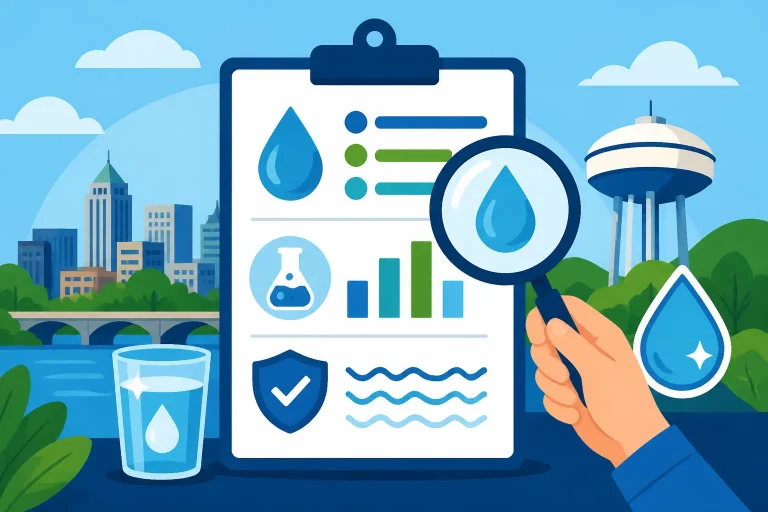
Then look for the supplier’s annual water quality report, also called a Consumer Confidence Report. The report usually describes the source or sources, explains treatment and monitoring, and summarizes detected contaminants. Reports may be available through a utility’s website or through another official public-information channel. If you cannot find the report online, contact the utility using current details on its official website.
When reading the source section, look for language describing wells, groundwater, reservoirs, rivers, or purchased water. A report might name a source without giving a simple citywide label. Read the explanatory notes as well as the source list: a note may clarify whether the utility purchases finished water, uses multiple sources, or shares a source with another system.
A practical way to check is:
- Confirm the utility that serves your address.
- Find the latest available water quality report for that utility.
- Read the source description and any notes about purchased or blended water.
- Check the treatment section to see how the supplier processes its water.
- Contact the utility if the source name, service area, or report wording is unclear.
Avoid assuming a report for a nearby city covers your home. Adjacent communities may have different suppliers, and a regional provider may serve only part of a city or county. Use the supplier named on your account, then confirm the service area if the report does not clearly identify your address.
For more help locating or interpreting a report, see Finding Your Annual Consumer Confidence Report in Alabama and How Can Consumers Access Public Drinking Water Reports in Alabama?. If you want to review public records beyond the annual report, Checking Drinking Water Watch for Alabama Utility Records describes another way to look for utility information.
What the source does and does not tell you about tap water
Knowing where water begins is useful, but it is only one part of understanding what comes out of a faucet. Source water is not always the same as finished drinking water. Treatment occurs between collection and delivery, and the water then travels through storage tanks, mains, service lines, and plumbing inside a building.
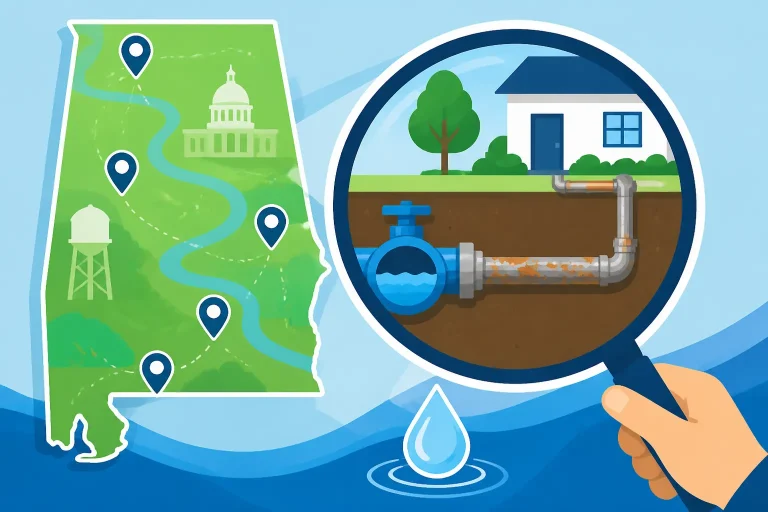
A source description cannot, by itself, tell you the water’s current quality at a particular tap. The utility report provides information about the system’s monitoring and results, but a citywide report may not describe conditions in every building’s plumbing. Pipe materials, building age, maintenance, and water use can affect what happens between the distribution main and an individual faucet.
A change in taste or appearance also does not automatically mean the source has changed. Water can look cloudy because of air bubbles, appear discolored because of sediment or plumbing conditions, or have an odor that originates in a building’s pipes. If a problem is sudden, persistent, or affects multiple homes, contact the utility and describe what you notice. For steps to sort out a household issue, see Water Issue: Is It the Alabama Utility Main or Your Own Pipes? and Troubleshooting Public Tap Water and Distribution System Issues.
If you are concerned about a specific contaminant, use the report to see what the utility monitors and what it reports. A broad source label is not a substitute for reviewing those results. If you need information about water at a particular faucet, the appropriate test depends on the concern, the sampling location, and the question you want answered. When Should an Alabama Homeowner Send Tap Water to a Certified Lab? explains when a certified laboratory may be useful.
Treatment products should not be selected based only on whether water comes from a well, river, or reservoir. Choose equipment based on a water test or a clearly identified concern, and check that the product’s certification addresses the contaminant or aesthetic issue you want to reduce. A filter designed for taste or odor is not automatically suitable for a different contaminant. The article Aesthetic Standards vs Health Claims for Tap Water Filters offers more context on evaluating treatment claims.
Using source information to ask better questions
Once you know the supplier and source type, you can ask more focused questions. Instead of asking only whether the city uses groundwater, ask which source is listed for your service area, whether the supplier uses multiple sources, and where the report explains treatment. If the system buys water, ask which provider supplies it and whether the report covers that purchased water.
If the report names a river, reservoir, or well but provides little context, ask whether the source information applies to the whole service area. Utilities may use several sources or supply different areas in different ways. A clear answer from the supplier can prevent you from mistaking a general system description for a block-by-block source map.
You can also ask how to interpret an unfamiliar term in the report. A named source may refer to the raw water before treatment, while another entry may describe a finished-water supplier. Ask which description applies and how the source is monitored. If your question concerns a specific taste, odor, or discoloration, describe where it occurs and whether it affects hot water, cold water, one fixture, or multiple locations. That detail can help the utility distinguish a system issue from a building-plumbing concern.
Keep the report for reference, especially if you are comparing results over time. Be sure to compare the same supplier and report period, and note any explanation of source changes or purchases. A report is a snapshot of system information and monitoring for its stated period, not a guarantee that every household tap will behave identically.
The most useful takeaway is straightforward: Alabama cities may rely on groundwater, surface water, or purchased treated water, and the source serving a particular home depends on its supplier and service area. The utility’s report is the best starting point for confirming that source, understanding treatment, and finding the monitoring information relevant to your tap.
Frequently Asked Questions
Do all Alabama cities get drinking water from rivers?
No. Municipal systems may use groundwater, surface water, purchased treated water, or a combination. Check the report for the utility serving your address.
Does groundwater mean water is untreated?
No. The source label does not tell you whether treatment occurs. Review the supplier’s treatment description and monitoring results for that system.
Can a city purchase drinking water from another utility?
Yes. A utility may distribute treated water supplied by another system. The report or utility can clarify who supplies the water and how the arrangement works.
Does the citywide water report describe every home’s tap?
Not necessarily. It describes information about the public water system, while building plumbing and service-line materials can affect water at an individual faucet. Contact the supplier about system questions and seek appropriate testing for a home-specific concern.
Sources
- Alabama Department of Public Health — Well Water | Alabama Department of Public Health (ADPH) (checked November 13, 2026)
- Alabama Department of Economic and Community Affairs — Water Conservation – ADECA (checked November 13, 2026)
Disclaimer
This article is for general informational purposes only and does not constitute professional advice. Laws, prices and regulations vary by location and change over time. Consult a qualified professional for guidance on your specific situation. Alabama Water Guide is not a government agency or water utility and is not affiliated with any public water system.