Setting Up a Payment Plan With an Alabama Water Utility
A past-due water bill can be stressful, especially when you cannot pay the full balance at once. Payment-plan options and eligibility differ among Alabama water utilities, so the first step is to contact your provider and ask what it can offer. This article explains what to check, what to ask, and how to avoid relying on assumptions that could put service at risk.
Contact the utility before the balance grows
If you know you will miss a payment, contact the water utility as soon as you can. Waiting until a final notice arrives may leave fewer options or less time to discuss them. A call or message does not guarantee that a plan will be approved, but it gives you a chance to learn the utility’s current process and explain what you can realistically pay.
Use the utility’s official website or a recent bill to find current customer-service contact details. If you call, write down the date, the name or identifier of the representative if provided, and the main points discussed. If you use an online account or send a written request, save a copy or screenshot of the message and any response.
Before reaching out, be clear about what you are asking for. You might want to know whether the utility offers installments, a due-date change, a short extension, or another arrangement. These are not the same thing. An extension may postpone a payment but leave the full amount due later, while installments may divide a balance across more than one payment. The utility can explain which choices, if any, are available for your account.
If your water has already been shut off, say so at the start of the conversation. Ask what steps are required to restore service and whether a payment arrangement is available in that situation. Do not assume that agreeing to make a payment, submitting a request, or paying part of the bill will restore service or pause disconnection activity. Ask the utility to confirm the effect of each step.
It can also help to review Alabama Utility Shutoff Rules: Past-Due Notices and Disconnection so you understand why it is important to check the notice and confirm your account’s status directly with the provider. The utility’s current notice and instructions should guide your next step.
Get clear on the balance and your ability to pay
A useful payment-plan request starts with a reliable picture of the amount due. Look at the latest bill, any past-due notices, and your account history. Check whether the balance includes only water service or also charges such as sewer, service fees, or other items. The bill may group charges together, so review the descriptions rather than assuming every amount relates to water use.
If you need help distinguishing the line items, Breaking Down Your Water Bill: Service, Usage, and Sewer can help you understand what may be included. If you believe a charge is incorrect, raise that concern separately from your request for time to pay. Ask how the utility handles billing questions and whether a dispute changes any payment or service deadlines. Do not assume that disputing a charge automatically pauses collection or disconnection steps.
Next, work out what you can pay without creating another immediate shortfall. Consider the money available now, the timing of your next income, and essential costs that are already due. A plan that looks manageable in the moment can become difficult if it requires large installments or overlaps with rent, food, transportation, or other bills.
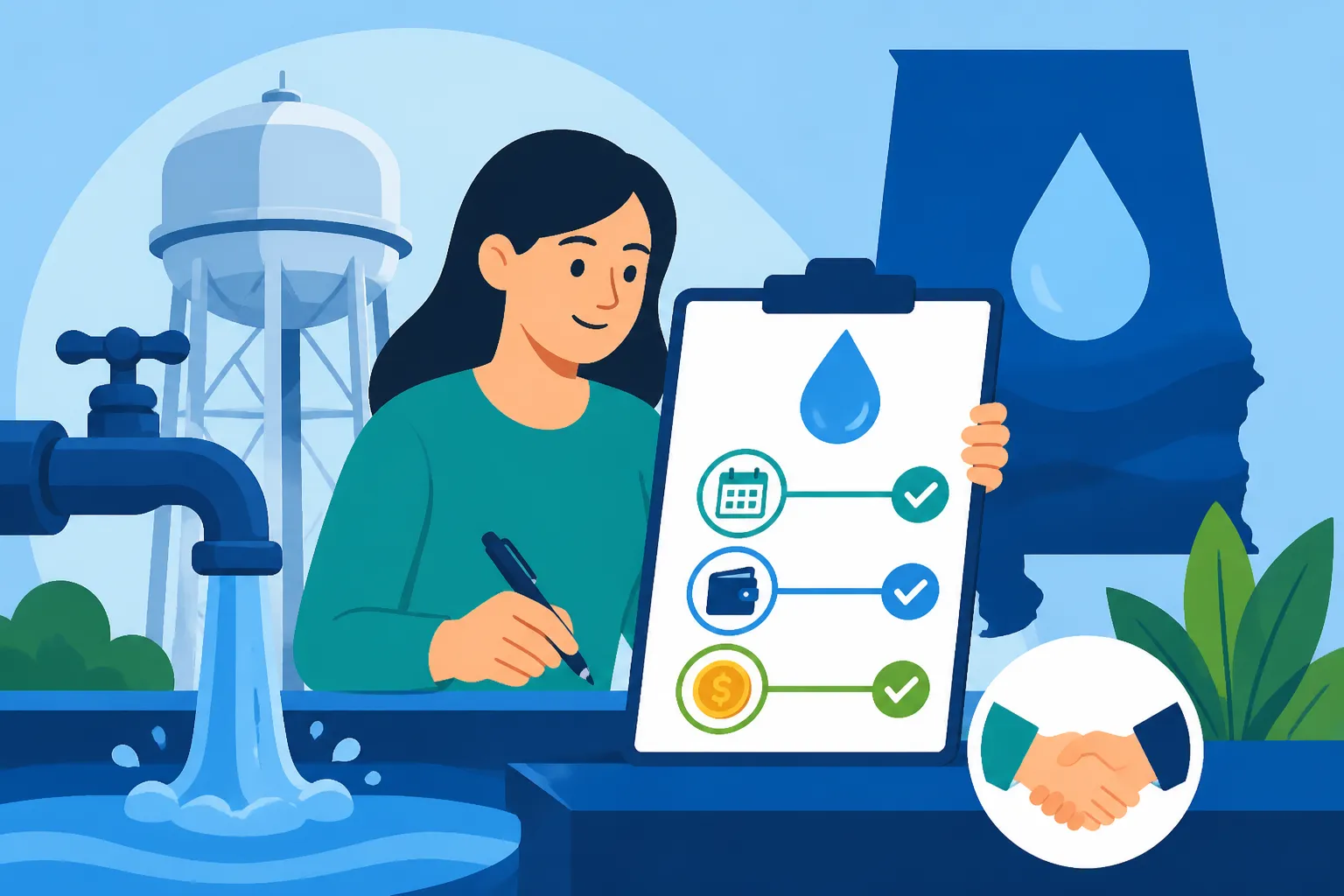
A simple worksheet can help you prepare:
| Information to gather | Why it matters |
|---|---|
| Current total balance | Gives you and the utility a shared starting point |
| Past-due amount and current charges | Helps clarify what the proposed plan would cover |
| Amount you can pay now | Shows whether an initial payment is possible |
| Amount you can manage regularly | Helps avoid agreeing to installments you cannot sustain |
| Dates money is usually available | Helps you ask whether payment timing can be discussed |
| Any disputed charge or unusual usage | Separates a billing question from a request for more time |
| Notice dates and instructions | Helps you understand what the utility says is due and when |
When deciding what to offer, be honest rather than optimistic. If your income varies, describe that clearly and ask what kind of arrangement the utility can consider. If you can make a partial payment, ask how it would be applied and whether it changes the account status. A partial payment may reduce the balance, but it may not prevent a late action or qualify as an accepted plan.
Ask specific questions and get the terms in writing
When you reach the utility, explain briefly that you cannot pay the full balance by the stated due date and want to ask about payment options. You do not need to give a lengthy personal account. Focus on the balance, what you can pay, and when you expect to be able to pay it.
Ask questions that turn a general conversation into a clear agreement:
- Is a payment plan available for this account, and what conditions apply?
- Does the plan require an initial payment?
- What amount would be due, and on what dates?
- Does the arrangement include the full past-due balance, current charges, or both?
- How should payments be made, and how can you confirm they have posted?
- What happens if a payment is late, missed, or less than the agreed amount?
- Does the plan change any pending disconnection action or service status?
- Will new monthly charges continue to be due while you pay the old balance?
- Can the terms be sent through the official account portal, email, or mail?
- If you cannot meet the proposed schedule, whom should you contact and when?
These questions matter because “payment plan” can mean different things in different billing systems. You need to know whether the arrangement applies only to an existing balance or whether it also sets expectations for future bills. If new charges continue to accumulate, a plan that addresses only the old balance may not prevent the total amount due from growing.
If a representative gives you an option by phone, ask for written confirmation before relying on it. The confirmation should make the payment amounts and dates clear, describe which charges are covered, and explain what happens if a payment is missed. If written terms are not available, make your own notes and ask the utility how you can verify the agreement through the account.
Keep the arrangement somewhere easy to find. Save the notice, email, portal message, or other written confirmation, along with payment receipts. If the account later shows a different balance or status than expected, these records will help you ask focused questions. For help with a billing disagreement or service issue, see Handling Billing Disputes and Utility Service in Alabama.
Compare the plan with other possible help
A payment plan is one possible way to manage a past-due balance, but it may not be the only route to ask about. Depending on the utility and your circumstances, there may be other options, such as a short extension, a due-date discussion, or information about local assistance. Availability is not uniform, and an option mentioned by one provider may not exist at another.
Ask the utility whether it knows of assistance programs or community organizations that may help with water costs. You can also review Need Help With Your Water Bill? Assistance Options and Overdue Water Charges: Community Programs That Assist for ideas about where to look. Treat any program details as a starting point, then confirm current eligibility, application steps, deadlines, and funding directly with the organization responsible for the program.
Do not assume that a community program has notified the water utility on your behalf. If you apply for assistance, ask both the organization and the utility what documentation is needed and whether the application affects your account while it is being reviewed. Until the utility confirms otherwise, keep following the account’s current instructions and notice dates.
If the balance appears connected to an unusually high bill, ask whether the utility has a process for reviewing the usage or meter reading. Check for a visible leak or a change in household water use, but do not treat a suspected leak as proof that the bill will be adjusted. If you want to understand what to ask about a possible leak credit, Do Alabama Water Leak Adjustments Cover Sewer Charges Too? explains why the utility’s specific policy matters.
Likewise, if you have questions about whether a balance is correct, request an explanation of the charges and the steps for a formal billing review. Keep those questions distinct from the payment-plan discussion. You can tell the utility that you are asking about a plan while also seeking clarification on a particular charge. Ask whether the two processes can proceed at the same time and whether either one affects the other.
Follow through and respond quickly if circumstances change
Once a plan is accepted, put each due date on a calendar and use reminders that work for you. If the utility allows more than one payment method, choose one you can reliably use and keep proof of each payment. Check the account afterward to make sure the payment posted and the balance changed as expected. Payment processing times and account updates can vary, so avoid waiting until the last moment if a deadline is approaching.
Continue reading each new bill. A payment plan for an older balance may not cover the next monthly bill, and unpaid new charges can make it harder to stay current. If the plan requires both installments and regular charges, track them separately in your budget. Contact the utility promptly if the next bill is higher than expected or if a payment does not appear in your account.
If you realize you cannot make an agreed payment, contact the utility before the due date if possible. Explain what has changed, say what you can pay and when, and ask whether the arrangement can be revised. A request to change the terms is not the same as an approved change. Get confirmation before assuming that the original schedule has been modified.
If you receive a new notice, read it carefully even if you are already discussing a plan. Note the date, the balance stated, and any action the notice says may follow. Ask the utility whether the existing arrangement is still active and whether the new notice changes anything. Do not rely on an earlier conversation if the account has since received a different notice or status update.
When a plan is not affordable, say so instead of agreeing just to end the conversation. Ask whether a different schedule or another available option can be considered. You may also contact community assistance organizations to learn what support is currently available. For a wider look at options when bills are overdue, Managing Overdue Municipal Water Bills and Service Hardship may help you prepare questions for the utility and local organizations.
Frequently Asked Questions
Does every Alabama water utility offer payment plans?
No. Options and eligibility can differ by utility and account. Contact your provider directly and ask what arrangements are currently available for your balance.
Will making a partial payment stop a shutoff?
Do not assume so. Ask the utility whether the payment changes your account status or affects any pending action, and request confirmation of the terms.
Should I wait for a final notice before asking for help?
Usually, it is better to contact the utility as soon as you know you may not be able to pay. Earlier contact gives you more time to ask about options, though it does not guarantee a particular outcome.
What if I disagree with part of the bill?
Ask the utility how to request a review and what deadlines or payment requirements still apply while the question is being considered. Keep the billing dispute separate from the payment-plan request, and do not assume that one pauses the other.
Disclaimer
This article is for general informational purposes only and does not constitute professional advice. Laws, prices and regulations vary by location and change over time. Consult a qualified professional for guidance on your specific situation. Alabama Water Guide is not a government agency or water utility and is not affiliated with any public water system.